TL;DR — the quick answer
Stick with Nespresso if: you drink 1-2 coffees a day, value absolute convenience and zero mess, and don't mind paying ~35-45p per pod. Pods are genuinely convenient and consistent.
Upgrade to bean-to-cup if: you drink 2+ coffees a day, want fresher coffee from whole beans, and want to cut your cost-per-cup to ~10-15p. A bean-to-cup machine pays for itself within months at higher volumes.
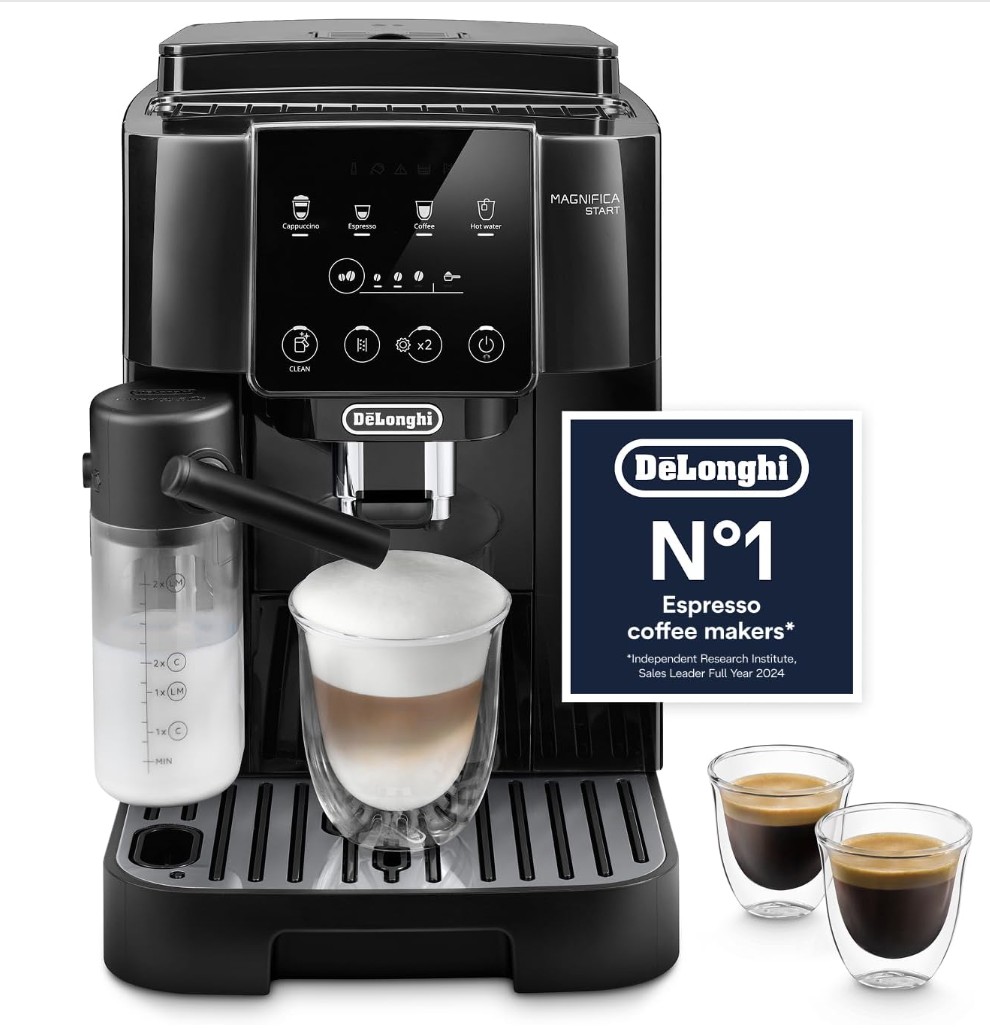
The best upgrade path: the De'Longhi Magnifica Start — fully automatic, makes fresh bean coffee at one button press, and the running-cost savings versus pods recoup the price quickly.
Millions of UK homes own a Nespresso (or other pod) machine — and a common question is whether upgrading to a bean-to-cup machine is worth it. The honest answer: it depends on how much coffee you drink and how much you care about cup quality and running costs. This guide compares pods vs bean-to-cup on the things that actually matter, and shows the best upgrade path if you decide to switch. Last updated: June 2026
The short answer
Best for daily drinkers & lower cost per cup
Grinds fresh whole beans for every cup. ~10-15p per coffee vs 35-45p per pod. Fresher taste, less waste, more drink variety. Pays for itself within months at 2+ coffees a day.
Best for low volume & ultimate convenience — pods ~35-45p each
Drop in a pod, press a button, done. Zero grinding, minimal cleaning, perfectly consistent. Higher cost per cup and less fresh, but unbeatable for convenience and low-volume drinkers.
Head-to-head comparison
| Category | Bean-to-Cup | Nespresso | Winner |
|---|---|---|---|
| Cost per cup | ~10-15p (whole beans) | ~35-45p (pods) | Bean-to-Cup |
| Coffee freshness | Excellent — ground per cup | Good — sealed pods | Bean-to-Cup |
| Convenience | Good — one button, but refill/empty | Excellent — drop pod, press, done | Nespresso |
| Cleaning & upkeep | More — hopper, puck bin, descaling | Minimal — empty used pods | Nespresso |
| Bean / pod choice | Any whole beans you like | Pod range only | Bean-to-Cup |
| Milk drinks | Excellent — auto frothing | Good — on milk models | Bean-to-Cup |
| Upfront cost | £349+ (Magnifica Start) | £80-200 (pod machine) | Nespresso |
| Waste | Used coffee grounds (compostable) | Single-use pods (recyclable schemes) | Bean-to-Cup |
| Best for | 2+ coffees/day, quality-focused | 1-2 coffees/day, convenience-focused | Depends on you |
Bean-to-Cup in detail
A bean-to-cup machine grinds fresh whole beans for every single cup, which is the single biggest quality upgrade over pods. The coffee tastes fresher because it's ground seconds before brewing, rather than sealed in a pod weeks or months earlier. You also get full control over strength, and access to any beans you like — including freshly UK-roasted ones that simply aren't available as pods.
The running cost is where bean-to-cup wins decisively. A Nespresso pod costs ~35-45p; the equivalent coffee from whole beans costs ~10-15p. At two coffees a day, that's a saving of roughly £350-400 a year — meaning a De'Longhi Magnifica Start pays for itself in about a year, and everything after that is saving.
The trade-off is convenience and cleaning. Bean-to-cup machines need the bean hopper topped up, the puck container emptied, and periodic descaling — more involved than dropping in a pod. But modern machines like the Magnifica Start automate the actual coffee-making completely: press one button, get a fresh drink. For daily coffee drinkers, the small extra effort is well worth the fresher coffee and lower cost.
Who should buy Bean-to-Cup
- You drink 2 or more coffees a day (the cost savings compound fast)
- You want fresher coffee from whole beans, not sealed pods
- You want to cut cost-per-cup from ~40p to ~12p
- You'd like to reduce single-use pod waste
- You want café-style milk drinks from one machine
Nespresso in detail
Nespresso (and other pod systems) win on pure convenience. Drop in a pod, press a button, and you get a perfectly consistent coffee with zero grinding and almost no cleaning. There's no bean hopper to fill, no puck to empty, and the milk side (on Vertuo/Lattissima models) is simple. For low-volume drinkers, this convenience is genuinely hard to beat.
The downsides are cost and freshness. At ~35-45p per pod, a two-coffee-a-day habit costs £300-330 a year in pods alone — far more than whole beans. And while pod coffee is consistent, it's never as fresh as beans ground seconds before brewing. You're also limited to the pod range available, rather than any beans you fancy.
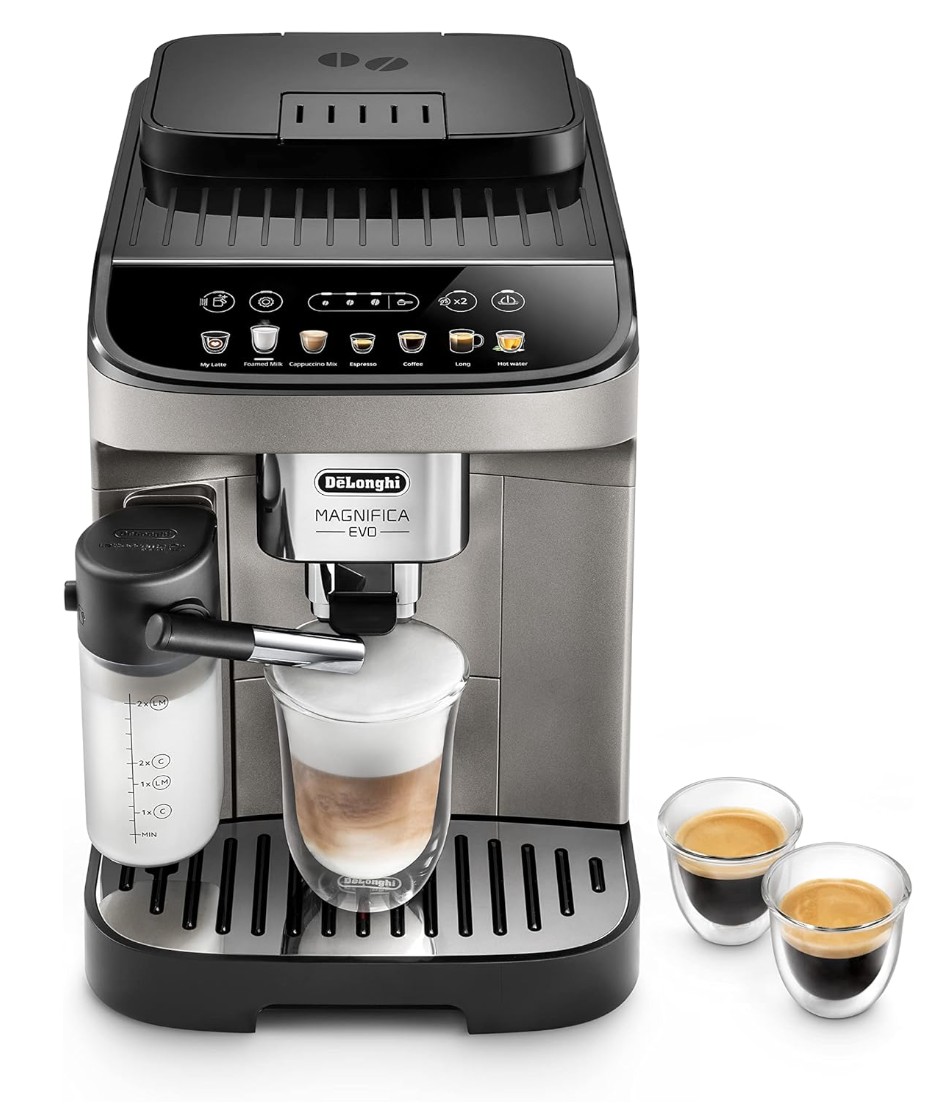
If you drink only one or two coffees a day and value convenience over cost and freshness, a Nespresso is a perfectly sensible choice — there's no need to upgrade. But if your consumption has crept up, or you've started caring more about coffee quality, the maths and the taste both point towards bean-to-cup. If you do upgrade and want the closest thing to pod convenience, the De'Longhi Magnifica Evo with its one-touch LatteCrema system is the natural step.
Who should buy Nespresso
- You drink only 1-2 coffees a day (cost savings of bean-to-cup don't add up)
- You value absolute convenience and minimal cleaning above all
- You like the consistency and zero-mess of pods
- Counter space is very tight (pod machines are compact)
- You don't want to think about beans, grinding or descaling
Which should you buy?
If you drink 1-2 coffees a day: Stick with Nespresso. The cost savings of bean-to-cup don't add up at low volume, and the pod convenience is worth it. No need to spend £350+ on a machine you won't use enough to justify.
If you drink 2+ coffees a day: Upgrade to bean-to-cup. The De'Longhi Magnifica Start pays for itself within about a year in pod savings, and the coffee is noticeably fresher.
If you mostly drink lattes and cappuccinos: Bean-to-cup is the clear upgrade. The De'Longhi Magnifica Evo with automatic LatteCrema milk produces café-style milk drinks far beyond what most pod machines manage.
If you want pod-like convenience but fresher coffee: A fully-automatic bean-to-cup like the Magnifica Start is the answer — it's nearly as hands-off as a pod machine (press one button) but grinds fresh beans every time.
What beans should you use?
Both machines work brilliantly with medium-roast Arabica blends. Our top picks:
- Lavazza Qualità Oro (£14/kg) — best everyday all-rounder
- Spiller & Tait Signature Blend (£18/kg) — freshly UK-roasted
- illy Classico — premium everyday option
Avoid very dark, oily roasts in fully-automatic machines — they can clog integrated grinders. See our full best coffee beans UK guide.