TL;DR — our top picks
Best overall: De'Longhi EcoDecalk DLSC500 — plant-based lactic acid, gentle on machines, works in any brand. The default choice for most UK households.
Best for Sage / Breville: Durgol Swiss Espresso — fast-acting, removes 100% of limescale, trusted by espresso enthusiasts.
Best value multipack: De'Longhi EcoDecalk DLSC502 — 2×500ml, 10 descaling cycles, universal compatibility. Cheapest per descale.
Descaling is the single most important thing you can do to extend your coffee machine's life and keep your coffee tasting right. The wrong descaler — or skipping it — leads to limescale build-up, weak flow, bitter coffee, and eventually a dead machine. These are the descalers we recommend for UK water, matched to machine type. Last updated: June 2026
Our picks in detail
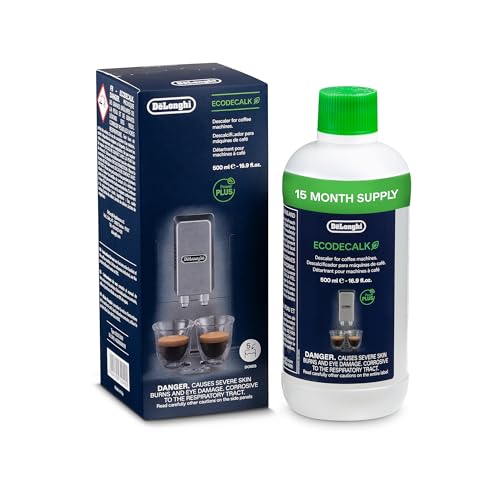
- 500ml, 5 doses
- Plant-based lactic acid
- Works in any brand
- Manufacturer-recommended
The default recommendation for most UK households. EcoDecalk uses natural lactic acid (gentler than citric acid descalers) and is the descaler De'Longhi recommends for its own machines — but it works in any brand: bean-to-cup, pump espresso, filter, and pod machines. One 500ml bottle gives five descaling cycles. If you have a De'Longhi Magnifica, this is the obvious choice; if you have anything else, it's still an excellent default.
Check price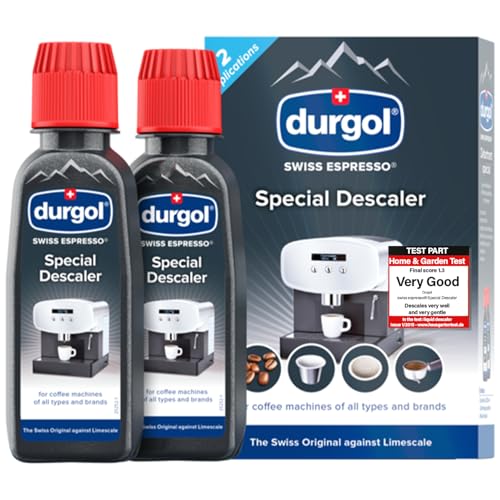
- 2×125ml
- Fast-acting
- Removes 100% limescale
- Swiss-made
The espresso enthusiast's choice. Durgol works 5-10 times faster than citric acid descalers and is the only common descaler that removes 100% of limescale without leaving calcium residue behind. It's particularly popular with Sage / Breville and traditional espresso machine owners (Gaggia Classic, Rancilio) who want a thorough, fast descale. Each 125ml bottle does one full descaling cycle. Slightly pricier per use, but the gold standard for thoroughness.
£9.18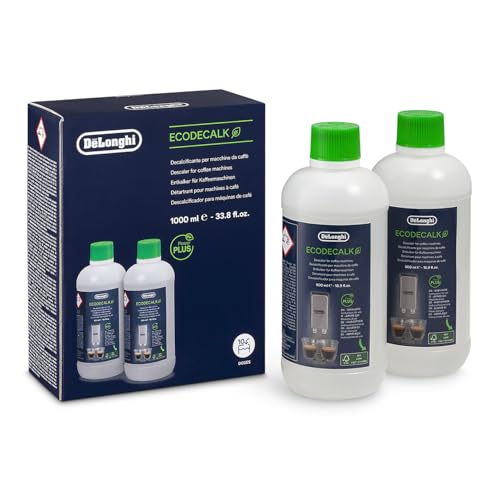
- 2×500ml
- 10 descaling cycles
- Universal
- Lowest cost per descale
Same trusted EcoDecalk formula as the DLSC500, but in a 2×500ml twin pack giving ten descaling cycles — the lowest cost-per-descale of any option here. If you descale every 2-3 months (as you should in most UK hard-water areas), this pack lasts well over a year. Universal compatibility means it works in any machine, so it's the smart buy if you want to stock up and forget about it.
£18At a glance
| Descaler | Size | Best for | Acid type |
|---|---|---|---|
| De'Longhi EcoDecalk DLSC500 | 500ml (5 doses) | All-rounder | Lactic (gentle) |
| Durgol Swiss Espresso | 2×125ml | Sage / espresso | Fast-acting |
| De'Longhi EcoDecalk DLSC502 | 2×500ml (10 doses) | Value / stocking up | Lactic (gentle) |
How to choose a descaler
How often should you descale?
It depends on your water hardness and how much you use the machine. In hard-water areas (most of southern and eastern England), descale every 4-6 weeks. In soft-water areas, every 2-3 months is fine. Most bean-to-cup machines have a descale-reminder light — but don't ignore it, and don't wait for it if you're in a hard-water area. You can check your water hardness on your water supplier's website by postcode.
Lactic vs citric vs sulphamic acid
Lactic acid (EcoDecalk) is the gentlest and plant-based — best for regular maintenance and bean-to-cup machines. Citric acid is cheap and food-safe but slower. Sulphamic acid is the most aggressive and fastest for stubborn scale, but harsher on machines. For most people, a lactic-acid descaler like EcoDecalk is the right balance of effectiveness and gentleness.
Should you use the manufacturer's descaler?
For warranty peace of mind, yes — some manufacturers (especially Sage and Jura) specify particular descalers, and using the wrong one could theoretically affect a warranty claim. In practice, a quality universal descaler like EcoDecalk or Durgol works perfectly in almost all machines. Check your manual if you're in any doubt, particularly for machines still under warranty.
Never use vinegar
It's a common myth that vinegar is a good DIY descaler. It's not — it's less effective than a proper descaler, leaves a lingering taste and smell that's very hard to rinse out, and can damage rubber seals over time. A £10-15 bottle of proper descaler is far cheaper than a damaged machine.
- UK water hardness & your machine — descaling schedule by region
- How to clean a milk frother · How to clean a coffee grinder
- Coffee machine deals UK — when Sage & De’Longhi really go on sale